iPhone 16 vs 16 Pro: choose by the job you give it
The iPhone 16 and 16 Pro both went on sale on 20 September 2024, so neither model has an age advantage. What matters is what you need your phone to do.
The iPhone 16 is the default refurbished buy. It shares the Pro's chip generation and its 8 GB of RAM, and it has a 48 MP main camera too. The Pro earns its place only when one of its extra features does a job you can name: a 120 Hz screen you can feel, a 5x telephoto lens you use, ProRes video or fast transfers over a USB 3 cable. Each of these features comes with a condition that you can check before you pay.
Here is the short answer for three kinds of buyers.
- Choose the iPhone 16: It's a good fit if you use your phone for messaging, browsing, streaming and everyday photos.
- Choose the iPhone 16 Pro: It makes sense if you can name a weekly job for one of its extra features.
- Skip the Pro: You don't need it for Apple Intelligence or RAM: both phones are on Apple's current list of Apple Intelligence devices, and both carry 8 GB of RAM.
Both phones are available refurbished on refurbed: the iPhone 16 and the iPhone 16 Pro. A refurbished iPhone is professionally checked, cleaned and reconditioned before it is sold, and sellers test every device.
iPhone 16 vs iPhone 16 Pro: specs compared
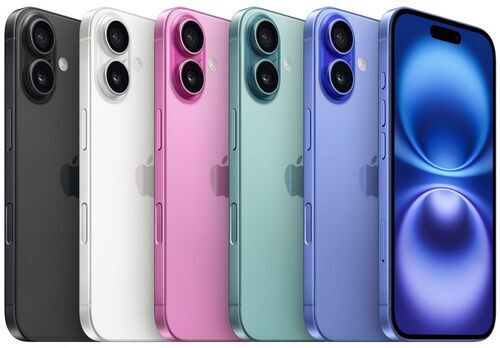
From 598,80 €
Screen size
6.1 inches
Display
OLED, HDR10+ (Dolby Vision)
Chip
Apple A18
GPU
5-core
RAM
8 GB
Rear cameras
48 MP main, 12 MP ultra-wide
Connector
USB-C 2.0
Battery
3,561 mAh
Weight
170 g
Released
2024
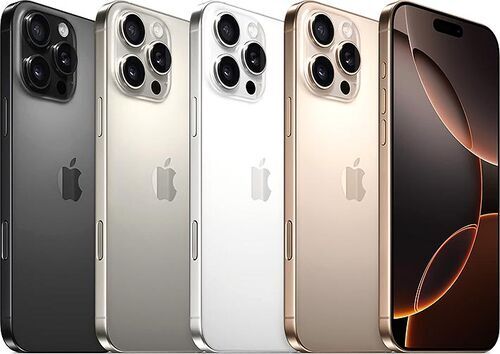
6.3 inches
120 Hz, OLED, HDR10+ (Dolby Vision)
Apple A18 Pro
6-core
8 GB
48 MP main, 48 MP ultra-wide, 12 MP telephoto
USB-C 3.1
3,582 mAh
199 g
2024
The scroller: does the iPhone 16 have 120 Hz?
No. The iPhone 16 runs its screen at 60 Hz, while the iPhone 16 Pro has ProMotion, which adapts the refresh rate up to 120 Hz. Apple lists ProMotion for the Pro only, and Notebookcheck's review of the iPhone 16 names its 60 Hz refresh rate as a drawback. The Pro also has an always-on display, which keeps the lock screen readable without waking the phone.
The two screens are alike in other ways: both are OLED, and both have a pixel density of 460 ppi. The Pro has a 6.3-inch screen and is 71.5 mm wide, almost as wide as the iPhone 16 at 71.6 mm, but 2 mm taller. The Pro weighs 199 g against 170 g, a gap of 29 g, and has a titanium exterior where the iPhone 16 has aluminium.
When the 120 Hz screen pays off. COMPUTER BILD especially recommends 120 Hz to people who are used to it, and says messaging and social scrolling can benefit too. If a 120 Hz phone has ever made your own screen look slow, or you scroll for hours a day, the Pro's screen is worth having. The test costs nothing: scroll a long web page on a 120 Hz phone, then scroll the same page on a phone that runs at 60 Hz. If you cannot tell the difference, the screen is no reason to pay more for the Pro.
Of the Pro's extra features, the screen is the one you use every minute you hold the phone, and the trade-off is 29 g more in your pocket. The always-on display lets you check the time and notifications at a glance, but it offers no measured benefit beyond that convenience.
The photographer: iPhone 16 vs 16 Pro cameras, lens by lens
The main camera. Both phones have a 48 MP main camera. Apple lists the iPhone 16's main lens at f/1.6 and the Pro's at f/1.78, and says the Pro has second-generation sensor-shift stabilisation. That means the iPhone 16's main lens has a wider aperture and, on paper, lets in more light. In GSMArena's side-by-side samples, daylight photos at 1x and 2x looked very similar, and low-light photos at 1x were effectively equal.
The ultra-wide lens. The iPhone 16 has a 12 MP ultra-wide lens, while the Pro has a 48 MP one. Both focus automatically and shoot close-ups in macro mode. COMPUTER BILD found that both phones produced photos of similar quality, whether shooting everyday scenes or macro close-ups.
The zoom. Zoom is where the cameras differ most. The Pro has a separate 12 MP telephoto lens for 5x shots and offers digital zoom up to 25x. The iPhone 16 reaches 2x by using a 12 MP crop of its main sensor and zooms digitally up to 10x. GSMArena says the Pro's 5x lens gives it a clear advantage when photographing distant subjects. DXOMARK says the iPhone 16 loses texture and detail at medium and long telephoto zoom levels because it has no dedicated telephoto lens. The Pro can also shoot in Apple ProRAW, a format designed for editing.
The night-photo claim. Some comparison pages say the Pro is much better in low light. In GSMArena's samples, low-light photos from the two phones looked much the same at 1x. At 2x, the Pro's photos looked slightly better only occasionally. For portraits at night, though, Apple lists LiDAR-assisted night portraits for the Pro only.
When the extra lens pays off. The 5x lens pays off if you shoot things you cannot walk up to: a stage, a pitch, a mountain, a bird. If you can step closer, the 48 MP main camera does the job without a telephoto lens. Scroll through your own camera roll and count the photos you wish you'd taken from closer up. If the count is low, you'll rarely use the Pro's telephoto lens. The iPhone 16 Pro buying guide covers the Pro's camera system in full.
The filmer: ProRes, 4K at 120 fps and the 128 GB or 256 GB choice
Both phones record Dolby Vision video: the iPhone 16 up to 4K at 60 frames per second (fps), the Pro up to 4K at 120 fps. Both also offer Cinematic mode up to 4K at 30 fps, Action mode up to 2.8K at 60 fps and spatial video at 1080p. In ordinary 4K30 footage, GSMArena found the iPhone 16's video softer, most visibly on the ultra-wide camera, and its night video largely similar to the Pro's. In DXOMARK's video tests under its older v5 protocol, the iPhone 16 scored 154 and the Pro 159. Those are protocol scores, not percentages, and they cannot be compared with DXOMARK's newer v6 scores.
What ProRes asks of the phone. Only the Pro records ProRes and Apple Log video. Apple limits the ProRes recording options according to storage size and whether you use an external drive. A 128 GB Pro can record ProRes at 1080p and 25 or 30 fps and save the footage on the phone. With 256 GB or more, the Pro can record 4K ProRes at 24, 25 or 30 fps and save the footage on the phone. For 4K ProRes at 60 or 120 fps, the Pro records to an external drive. Apple requires an exFAT drive and a 10 Gbit/s USB 3 cable. The drive needs a write speed of at least 220 MB/s for 4K at 60 fps or 440 MB/s for 4K at 120 fps. The cable in the box is USB 2, so it does not qualify.
What a ProRes clip weighs. Apple says ProRes files can be up to 30 times larger than HEVC files. An Apple estimate for the iPhone 15 Pro, relayed by MacRumors in 2023, puts one minute of 10-bit ProRes at about 1.7 GB in 1080p and about 6 GB in 4K. At that rate, a 10-minute 4K clip takes roughly 60 GB. The 60 GB figure is calculated from Apple's estimate for the older phone, not from a measurement of the iPhone 16 Pro, but it shows why the storage tier matters.
128 GB or 256 GB, on either phone. Apple says Apple Intelligence needs up to 8 GB of free space on these models. 128 GB suits you if you stream most of your entertainment and regularly move photos and videos off the phone. 256 GB makes sense if you have a large photo library, often record 4K clips, keep media offline, install large games or plan to keep the phone for a long time. A Pro with 256 GB or more can also record 4K ProRes and save it on the phone. The iPhone 16 price guide covers the general storage question.
The condition. ProRes and Apple Log pay off only if you adjust the colour and look of your footage during editing. ProRes in 4K at 60 or 120 fps needs a 10 Gbit/s cable and a fast drive, and 4K ProRes inside the phone, at up to 30 fps, needs 256 GB or more. If you film for family and friends rather than for editing and grading, the iPhone 16's 4K60 Dolby Vision video is enough.
The file mover and the gamer: USB 3, GPU cores and heat
The cable trap. Both phones have the same USB-C connector. Apple lists speeds of up to 480 Mbit/s over USB 2 for the iPhone 16 and up to 10 Gbit/s over USB 3 for the Pro. The Pro reaches its listed speed only with a compatible USB 3 cable, while Apple supplies a USB 2 cable.
At those two speed limits, 480 Mbit/s works out to 60 MB/s and 10 Gbit/s to 1,250 MB/s. Copying a 60 GB clip would take about 17 minutes at the first speed and under a minute at the second. Real speeds depend on the cable, the drive and the files, so treat the quoted transfer speeds as upper limits, not guarantees. If you often move large video files by cable, the Pro's port is a big advantage once you have the right cable. When either phone arrives, check that you can transfer data as well as charge it.
The sixth GPU core. The iPhone 16's A18 has a 5-core GPU, while the Pro's A18 Pro has a 6-core GPU. Both have a 6-core CPU and a 16-core Neural Engine. The Pro's extra graphics power and a screen refresh rate above 60 Hz can make a difference in games that support both. How many frames per second you get still depends on the game, its settings and how long you play.
Heat. In Notebookcheck's 3DMark stress tests, performance fell by almost a third on the iPhone 16 and by more than a third on the Pro in some runs. Notebookcheck's highest readings on the phones' outer surfaces were 45.3 degrees Celsius for the iPhone 16 and 45.9 degrees Celsius for the Pro. Those readings are surface temperatures, not chip temperatures. Both phones slow down under sustained load, and the Pro's chip name does not mean the phone runs cooler.
When each advantage matters. The Pro's extra GPU core and higher screen refresh rate can help in short sessions of supported games. Both phones slow down in long sessions, so session length alone is no reason to pay for the Pro. USB 3 pays off if you own a USB 3 cable and move large files by cable.
The all-day user: which phone lasts longer? Four tests, two winners
Apple rates the iPhone 16 for up to 22 hours of local video playback and 18 hours of streaming. For the Pro, Apple quotes up to 27 hours of local video playback and 22 hours of streaming. These are Apple's own ratings, and they show a wider battery-life gap between the phones than the independent tests do. Their batteries have similar capacities: 3,561 mAh in the iPhone 16 and 3,582 mAh in the Pro.
Four independent tests point to two different winners:
- Tom's Guide: In a continuous web-browsing test over 5G at a fixed screen brightness, the iPhone 16 lasted 12 hours 43 minutes and the Pro 14 hours 7 minutes, so the Pro won.
- Notebookcheck: In its Wi-Fi web-surfing test, the iPhone 16 lasted 18 hours 16 minutes and the Pro 16 hours 23 minutes, so the iPhone 16 won.
- COMPUTER BILD: It reports 9 hours 21 minutes for the iPhone 16 and 9 hours 58 minutes for the Pro, a win for the Pro. But it gives too little detail about its method for readers to compare those runtimes with the results of the other tests.
- GSMArena: Its battery tests show a small endurance advantage for the iPhone 16.
The tests use different workloads and date from 2024 and early 2025, so none measured a two-year-old battery. Apple quotes the same charging figures for both phones: about 50% in around 30 minutes with a 20 W or stronger USB-C adapter, and up to 25 W over MagSafe with a compatible charger and a 30 W or stronger adapter.
How battery wear affects estimated runtime. Here is a rough estimate based on Apple's video ratings, assuming runtime falls in proportion to battery capacity: with each phone's battery at 85% of its original capacity, the Pro would last about 23 hours of video and the iPhone 16 would last about 19 hours. Smartphones sold on refurbed have at least 85% of their original battery capacity, so a battery near that minimum would take about 4 hours off the Pro's rating and about 3 hours off the iPhone 16's, which is comparable to the 5-hour gap between the models.
What your choice depends on. A video-heavy day points to the Pro, because Apple's own ratings favour it. For browsing, the tests disagree, so the choice is close to a coin flip. Some comparison pages say the Pro always lasts longer, which the Wi-Fi results and the iPhone 16's small advantage in GSMArena's tests do not support. Whichever phone you pick, check the battery health of the phone you receive, because it can change the result as much as the model does.
The keeper: refurbished iPhone 16 battery health, repairs and resale
Same birthday. Both phones went on sale on 20 September 2024, so the models are about two years old. But each phone has its own history. Apple designs the batteries in the iPhone 15 and later models to retain 80% of their original capacity after 1,000 complete charge cycles under ideal conditions. That 1,000-cycle figure is a design target, not an average for two-year-old phones. Actual capacity depends on how each phone was used and charged. For comparison, one full charge a day adds up to about 730 cycles in two years.
The floor. On refurbed, smartphones have at least 85% of their original battery capacity, and devices in the Premium grade have at least 90%. A listing also shows the battery status: New Battery, Battery Excellent or Battery Good.
On arrival. Apple's battery screen (Settings, Battery, Battery Health) shows the maximum capacity, the cycle count, the manufacture date and the first-use date. Then try the features you paid for: test every lens, including the Pro's 5x lens, and press the Action button and Camera Control. Scroll through a long page to see how smoothly it moves on the Pro's 120 Hz display, and use a USB 3 cable to copy a large file to or from the Pro. The refurbished iPhone 16 buying guide has the full pre-purchase checklist.
Repair. iFixit gave both phones 7 out of 10 in its 2024 teardowns, with the Pro's score marked provisional. Both phones open from the back. The iPhone 16's battery adhesive releases with an electrical current, and the Pro's battery sits in a metal case with stretch-release adhesive. A worn battery can therefore be replaced later on either phone.
Updates. Apple lists both phones as supporting the Apple Intelligence features in iOS 27. It gives no end date for updates to either phone, so don't pay more for the Pro on the assumption that it will receive updates for longer.
Resale. On 27 October 2026, SellCell took a snapshot of buyback offers in US dollars for 128 GB phones in Good condition. The offers were 48.3% below the iPhone 16's launch price and 51.0% below the Pro's launch price. That puts the offers at 51.7% of the iPhone 16's launch price and 49.0% of the Pro's. This is one snapshot of US offers, not German sales or a forecast. In it, the Pro retains a slightly smaller share of its launch price.
If you're buying a phone to keep, choose the one with the healthier battery, whichever model it is.
Which refurbished iPhone 16 or 16 Pro suits you, and what should you check?



iPhone 16 vs 16 Pro FAQs
Is the iPhone 16 Pro worth it over the iPhone 16?
Only if you can name a job for one of its extra features. Both phones have an A18-generation chip, 8 GB of RAM and a 48 MP main camera, and GSMArena found their everyday photos very similar. The Pro adds a 120 Hz screen, a 5x telephoto lens, ProRes video and USB 3 transfer speeds, each with a condition.
Does the iPhone 16 have 120 Hz?
No. The iPhone 16 runs at 60 Hz, while the iPhone 16 Pro has ProMotion, which adapts the refresh rate up to 120 Hz. Both phones have an OLED screen with a pixel density of 460 ppi, so the difference is in smoothness, not sharpness.
What is the camera difference between the iPhone 16 and iPhone 16 Pro?
The Pro adds a 5x telephoto lens, a 48 MP ultra-wide lens (12 MP on the iPhone 16) and Apple ProRAW. Both have a 48 MP main camera, and in GSMArena's comparison their daylight photos at 1x and 2x looked very similar.
Is 128 GB enough on a refurbished iPhone 16 Pro?
Yes, if you stream most media and offload photos and videos. With 128 GB, the Pro can record ProRes video internally only at 1080p; with 256 GB or more, it can record ProRes internally in 4K. Apple Intelligence can also take up to 8 GB of free space.
What battery health should a refurbished iPhone 16 have?
On refurbed, smartphones have at least 85% of their original battery capacity, and devices in the Premium grade have at least 90%. When the phone arrives, check the figure under Settings, Battery, Battery Health.
Does the iPhone 16 Pro have more RAM or better AI than the iPhone 16?
No. Both phones carry 8 GB of RAM, as the product specifications show and as MacRumors' reading of Apple's Xcode device data confirms. Apple also lists both phones as supporting Apple Intelligence, so AI is not a reason to pay extra for the Pro.
Is the iPhone 16 still worth buying refurbished?
Yes, if the battery check passes. It went on sale on 20 September 2024, and Apple lists it as supporting the Apple Intelligence features in iOS 27. To compare it with other generations, read iPhone 16 vs iPhone 15 or iPhone 16 vs iPhone 17, or browse refurbished iPhones.
Pick the refurbished iPhone that fits your day
That leaves one question: what will you use the phone for? Choose the phone that does that job well, and ignore the features you'll never use.
refurbed runs an online marketplace where sellers offer refurbished electronics, and it won the ESG Innovation Award at the Business & Finance ESG Awards 2023.
Each phone comes with a warranty of at least 12 months and can be returned free of charge within 30 days, so you can check it at home when it arrives before deciding whether to keep it.


Sign up for our newsletter for the first time and save 15€!
Never miss an offer again.
Information about the use of personal data can be found in our Privacy policy.
Get the refurbed app
For iOS and Android


Confirm sign-up
Click the link in our confirmation e-mail to receive your voucher. It will be applicable to purchases from 200€.
- © Refurbed Marketplace GmbH
- Accessibility
- T&C
- Privacy Policy
- Imprint
- Legal Notices
- European Data Act
- Cookie Policy